
Methanol in distilling: fact and myth
Few subjects in distilling carry as much fear and as much misinformation as methanol. The truth is more useful than either: methanol is real and toxic, it comes from a specific source, and knowing where it comes from tells you how to keep it low.
In short
- Methanol comes mainly from pectin, found in fruit skins and flesh - not from yeast fermenting sugar. Sugar and grain washes contain very little; fruit washes contain more.
- Distillation doesn't create methanol. It carries it over with the ethanol, spread through the run rather than neatly in the first drops.
- Discarding the foreshots is good practice, but no cut and no temperature removes methanol completely.
- Most serious methanol poisonings come from drinks deliberately or carelessly mixed with industrial methanol. Never add industrial or denatured alcohol to anything you drink.
- Methanol poisoning is a medical emergency, and its symptoms are delayed. If you suspect it, get medical help at once.
Where methanol comes from
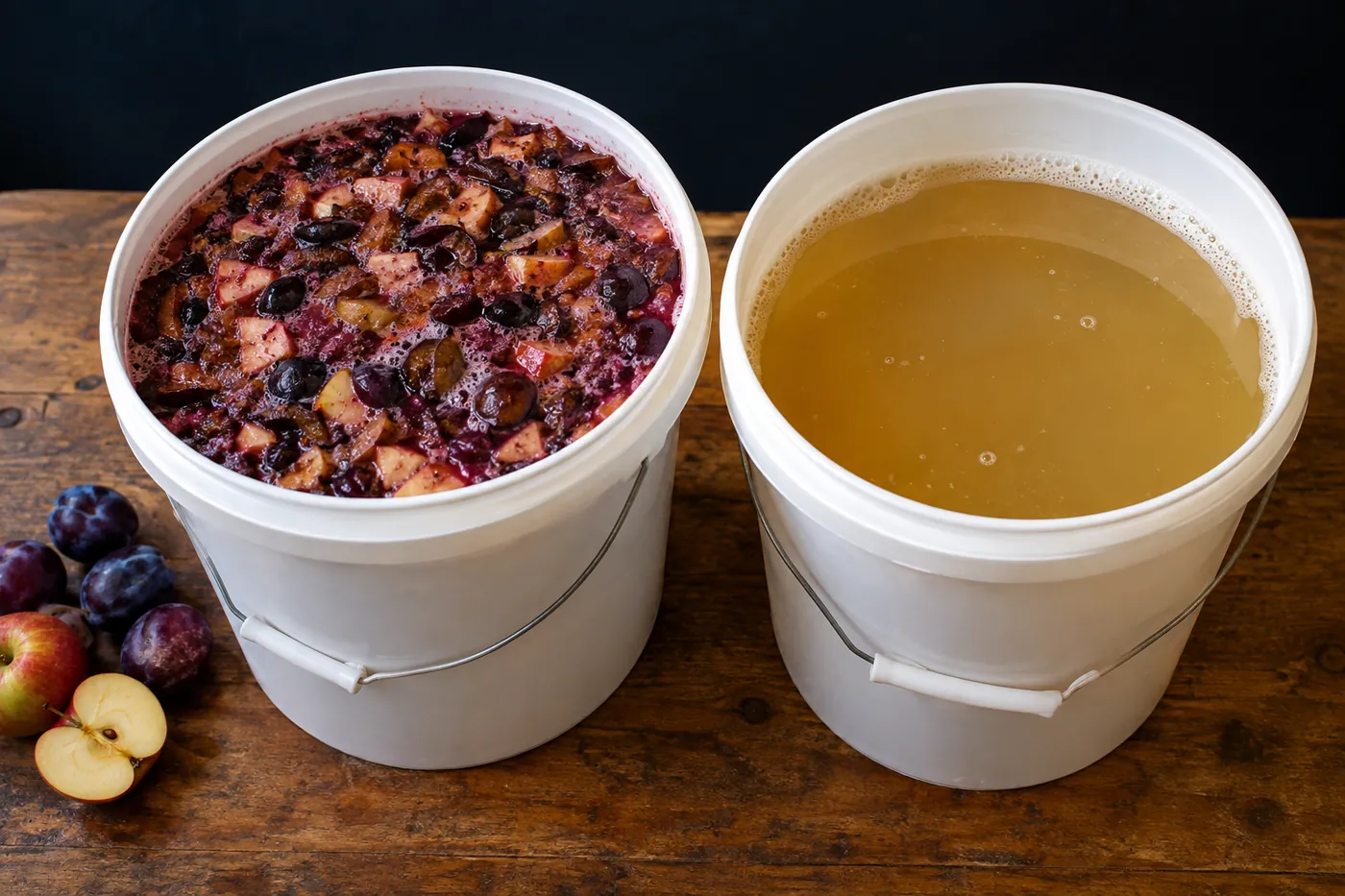
Pectin is the substance that helps hold plant cells together, and fruit is rich in it - especially the skins. Pectin carries small methyl groups; when it is broken down, by enzymes in the fruit itself or added ones, those groups are released as methanol. Yeast plays almost no part: fermenting sugar produces ethanol, not methanol.
That makes the raw material the deciding factor:
| Wash made from | Methanol | Why |
|---|---|---|
| Sugar (sucrose) | Very little | No pectin. |
| Grain (corn, barley, wheat, rye) | Low | Little pectin. |
| Molasses | Low | Little pectin. |
| Fruit | Higher, and variable | Pectin in skins and flesh; more when the fruit is broken down for longer, or treated with pectic enzymes. |
| Fruit pomace (skins and pulp left from winemaking) | Highest | Mostly skins, the richest source of pectin. |
Commercial spirits reflect the same pattern. In the European Union, vodka may contain no more than 10 g of methanol per hectolitre of pure alcohol, while spirits made from fruit pomace may contain up to 1,500 g - a hundred and fifty times more, and perfectly legal.
What distilling does - and doesn't do
Distillation doesn't make methanol, and a still can't conjure it from a sugar wash. What distillation does is carry the methanol in a wash over into the spirit along with the ethanol.
Methanol behaves much like ethanol in a still. Studies of fruit spirits find it in every fraction - heads, hearts and tails - and often peaking in the early hearts rather than in the very first drops. So the cuts influence it only modestly: they matter enormously for flavour, but they can't turn a high-methanol wash into a low-methanol spirit. Keeping methanol low starts with the fruit and the fermentation.
The myths
"Methanol boils off at 65 °C, so you can drive it off first."
Pure methanol boils at about 65 °C, but a still boils a mixture. At sea level, no ethanol–water vapour is cooler than about 78 °C, and methanol leaves the still spread through the run. A reading of 65 °C at the head means the still is warming up. See why a temperature chart can't tell you when to cut.
"All the methanol is in the foreshots."
The foreshots do carry some of it, along with other volatile compounds you don't want, and discarding them is sound practice. But they don't contain all of it.
"Home distilling makes people go blind."
The poisoning outbreaks reported around the world are overwhelmingly caused by drinks mixed with industrial methanol - usually to cut costs, sometimes by mistake. A sugar or grain wash distilled with ordinary care does not produce dangerous levels of methanol. The risk is real, but it lies in adulteration, contamination and carelessness with fruit, not in distillation itself.
"If it tastes all right, it's safe."
Methanol cannot be reliably tasted or smelled in a drink. Neither the nose nor the thermometer can confirm what is in a jar of spirit.
Keeping methanol low with fruit
- Use sound, clean fruit, and remove stems and leaves.
- Ferment promptly. The longer crushed fruit sits before and during fermentation, the more pectin is broken down.
- Be wary of pectic enzymes. Winemakers use them to break down fruit and clear juice, but they can release extra methanol from the pectin. Many fruit distillers avoid them, or choose preparations made for spirits.
- Separate the liquid from the solids before distilling, rather than heating skins and pulp in the boiler.
- Cut with care, discarding the foreshots generously - while remembering that the cuts are not the main control.
Warning signs of methanol poisoning
Methanol itself is not the main problem: the body converts it into formaldehyde and formic acid, which damage the optic nerve and other organs. That conversion takes time, so symptoms are often delayed by 12 to 24 hours or more - longer if ethanol was drunk at the same time. A few tens of millilitres of pure methanol can be fatal, and smaller amounts can cause blindness.
Signs include headache, dizziness, nausea and vomiting, abdominal pain, rapid or difficult breathing, and disturbed vision - blurring, or a "snowfield" effect.
If methanol poisoning is suspected, it is a medical emergency. Get medical help immediately, and take the drink or its container with you if you can. Effective treatment exists, and it works best when started early.
Where Stilligent fits
Stilligent separates the foreshots, heads, hearts and tails for each recipe and records every cut, so your runs are consistent and documented. But cut detection is a guide to separation and quality: it does not measure methanol or confirm what is in the collected spirit. Keeping methanol low depends on what goes into the wash.
Sources and further reading
- German Federal Institute for Risk Assessment (BfR): Questions and answers on methanol in spirits, including EU limits under Regulation (EU) 2019/787. bfr.bund.de
- Médecins Sans Frontières: Methanol poisoning - fact sheet. methanolpoisoning.msf.org
- Stoica, F. et al. (2020). Volatile compounds in different fractions of fruits distillate obtained by traditional distillation. Scientific Bulletin, Series F: Biotechnologies, XXIV(2). PDF
From the forum
Questions, corrections or experience of your own? Share them in this guide’s topic on the Stilligent forum.
More guides
-
Inverted sugar: how to make it, and what the acid does to your wash
How to invert sugar properly, what it does and doesn't do for a wash, and how the inverting acid changes your wash's pH - with a calculator. 10 min read
-
Making the cuts: foreshots, heads, hearts and tails
The jar method step by step, how to judge each transition by nose and palate, and the mistakes that cost the most spirit. 7 min read
-
Distilling safely: the hazards and good practice
Flammable vapour, pressure, electricity, heat and the spirit itself: the hazards of a still, and how careful distillers manage them. 6 min read
Underlined terms are explained in the glossary - tap one for a quick definition.