
NChooch's Carolina bourbon
No sugar: just cracked corn, cooked and converted with malted barley, fermented on the grain and aged on new charred oak. NChooch's Carolina bourbon takes more care than a sugar-head whiskey, and rewards it with an earthy, woody nose and a smooth cherry, vanilla and oak finish.
- Makes
- Bourbon-style whiskey
- Still
- Short column, about 80%
- Ferment
- About a week, on the grain
- Wash
- about 6–7% ABV
- Difficulty
- Moderate: mashing
About this recipe
NChooch shared this recipe after seven runs of it, prefaced with a reminder that bourbon is a defined style. Under US rules, bourbon must be made in the United States from a grain mixture of at least 51% corn, distilled to no more than 80% ABV, entered into new charred oak barrels at no more than 62.5%, bottled at no less than 40%, and contain no added colouring or flavouring.
The method is a true all-grain mash. Cooking gelatinises the corn's starch; the enzymes in malted barley then convert it to sugar during a long, warm rest. It takes more care than a sugar wash - temperatures matter - but gives a richer, more authentic whiskey.
Ingredients and calculator
A whisky distiller's yeast - the original uses Prestige WD - or your favourite.
Method
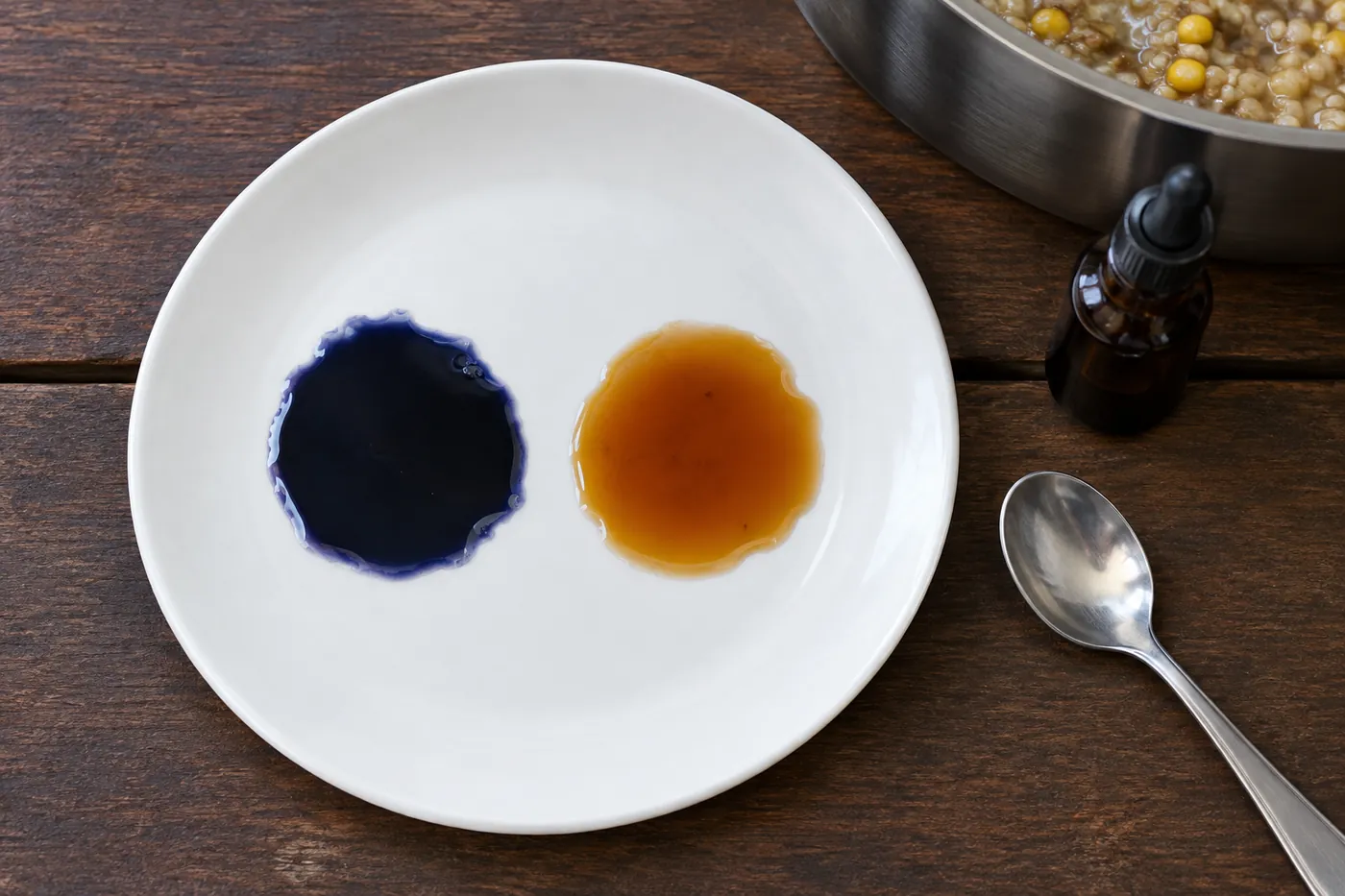
- Cook the corn. Simmer the cracked corn in about 15 L of good water for at least an hour - NChooch usually goes 90 minutes - keeping it at a low simmer and stirring so it doesn't burn. It gets very thick; adding half a pound of malted barley while it cooks (“pre-mashing”) loosens it.
- Cool to exactly 65 °C (150 °F). Never add the malt above 68 °C (155 °F): the enzymes are destroyed quickly, and you'll get no conversion.
- Mash in a cooler. Pour the corn into a large insulated cooler, which holds the heat through the rest. Add the malted barley; the temperature should drop to about 63 °C (145 °F).
- Hold and stir. Keep it covered at 63 °C, give or take 3 °C, for 2–3 hours, stirring well every 15 minutes. Optionally, a little Beano helps further conversion if you let it mash on overnight.
- Cool and transfer. Cool to about 27 °C (80 °F) and transfer everything - grain and all - to the fermenter. Top up to 23–26 L in total.
- Aerate and pitch. Aerate well and pitch the yeast.
- Ferment on the grain. Let it ferment for about a week.
- Strain into the boiler. Strain out the grain - NChooch uses a 5-gallon nylon paint-strainer bag - and transfer the wash to the boiler. There's no need to let it clear.
Fermentation
Fermenting on the grain gives more flavour; a thick cap forms, so stir it down in the first days. Once fermentation has finished, strain promptly.
Distilling
NChooch distils in a Bokakob-style column with some of the packing removed, so the spirit comes off at about 80% - the bourbon limit. Make your cuts, then dilute the spirit to 60% with good water.
Ageing: he oaks at 60% with two pieces of his own new, charred white oak in a glass jar for six months, then dilutes to 45% and bottles. Expect a slightly earthy, woody nose with vanilla, and a cherry, vanilla and oak taste that goes down smoothly.
Fermenting a wash is legal in many places; distilling it often is not. Distil only where it is legal to do so, and check your local licensing first.
Troubleshooting
Low starting gravity.
Incomplete conversion. Check the malt went in below 68 °C and that the mash held about 63 °C for the whole rest; mash longer if needed.
The corn scorched.
Keep the simmer low and stir often. Adding a little malt while cooking thins the porridge.
Rate this recipe
Made it? Tell other distillers how it turned out.
Ratings are anonymous. You can change yours at any time.
From the forum
Made it, or have a question about it? Start the conversation in this recipe’s topic on the Stilligent forum.
More recipes
-
Whiskey
Uncle Jesse's Simple Sour Mash (UJSSM)
Cracked corn and sugar, re-fermented generation after generation with backset. Simple, cheap, and better with every batch.
Pot still -
Whiskey
Sweet feed whiskey
Molasses-coated livestock grain and sugar: an easy, smooth whiskey from a feed-store sack.
Pot still -
Whiskey
Cornflakes whiskey
Breakfast cornflakes and sugar: a sweet, full corn whiskey for anyone who can't get good corn.
Pot still, strip and spirit run
Underlined terms are explained in the glossary - tap one for a quick definition.