
Birdwatchers sugar wash
Sugar, water, a little tomato paste and ordinary bread yeast. Few recipes have been fermented as often as this one, and for good reason: it is cheap, forgiving and makes a clean neutral spirit - the classic base for vodka and gin.
- Makes
- Neutral spirit
- Still
- Reflux, or pot (two runs)
- Ferment
- 5–14 days
- Wash
- about 8–10% ABV
- Difficulty
- Easy
About this recipe
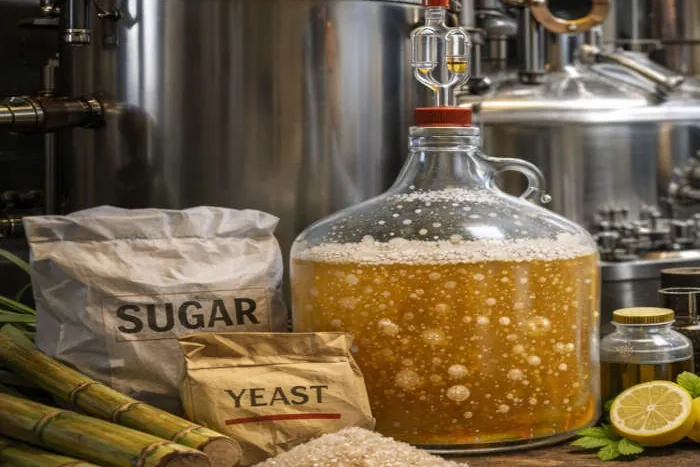
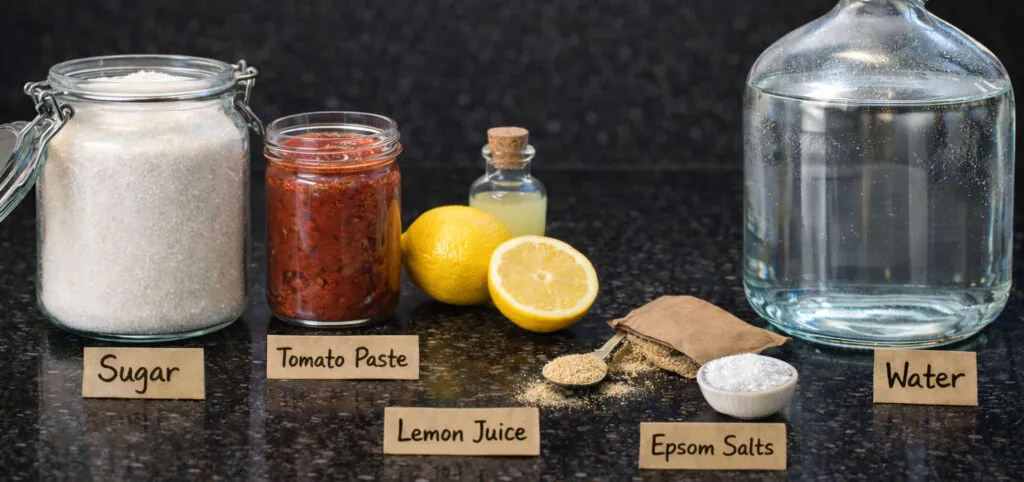
The Birdwatchers wash takes its name from the distiller who first shared it, and it has been refined by thousands of home distillers since. It is also known simply as TPW, the tomato-paste wash. The paste is there for the yeast, not for flavour: it supplies the nitrogen, vitamins and minerals that plain sugar lacks, so a basic bread yeast can ferment cleanly without commercial nutrients.
The result is a wash with little character of its own - exactly what you want for a neutral spirit. Run through a reflux still it becomes a clean vodka, or the base for a gin such as Odin's Easy Gin.
Ingredients and calculator
Dry bread yeast tolerates roughly 12–14% ABV.
Method
- Mix the bulk of the wash. In a clean fermenter, dissolve about four-fifths of the sugar in about four-fifths of the water, warm enough to dissolve it easily. Stir in the tomato paste, lemon juice and Epsom salts until there are no lumps.
- Adjust the gravity. Take a hydrometer reading. Add sugar to raise it or water to lower it, aiming for 1.060–1.070 (most distillers stay below 1.070), then make up the full volume.
- Bring it to temperature. Warm the wash to 26–30 °C - 28 °C is the usual target. An aquarium heater in the fermenter works well.
- Pitch the yeast. Sprinkle the yeast evenly over the surface and leave it; there's no need to stir it in.
- Ferment. Fit an airlock, or cover loosely so carbon dioxide can escape and nothing gets in. Keep the temperature steady. Daily gravity readings are optional but show progress.
- Let it finish and settle. After 5–14 days the gravity should reach about 0.990. When it stops falling and bubbling has ceased, leave the wash to settle for a few days - ideally a week - so the yeast and paste drop out.
- Siphon off the clear wash. Leave the sediment behind; it scorches easily in a boiler and adds off-flavours.
Fermentation
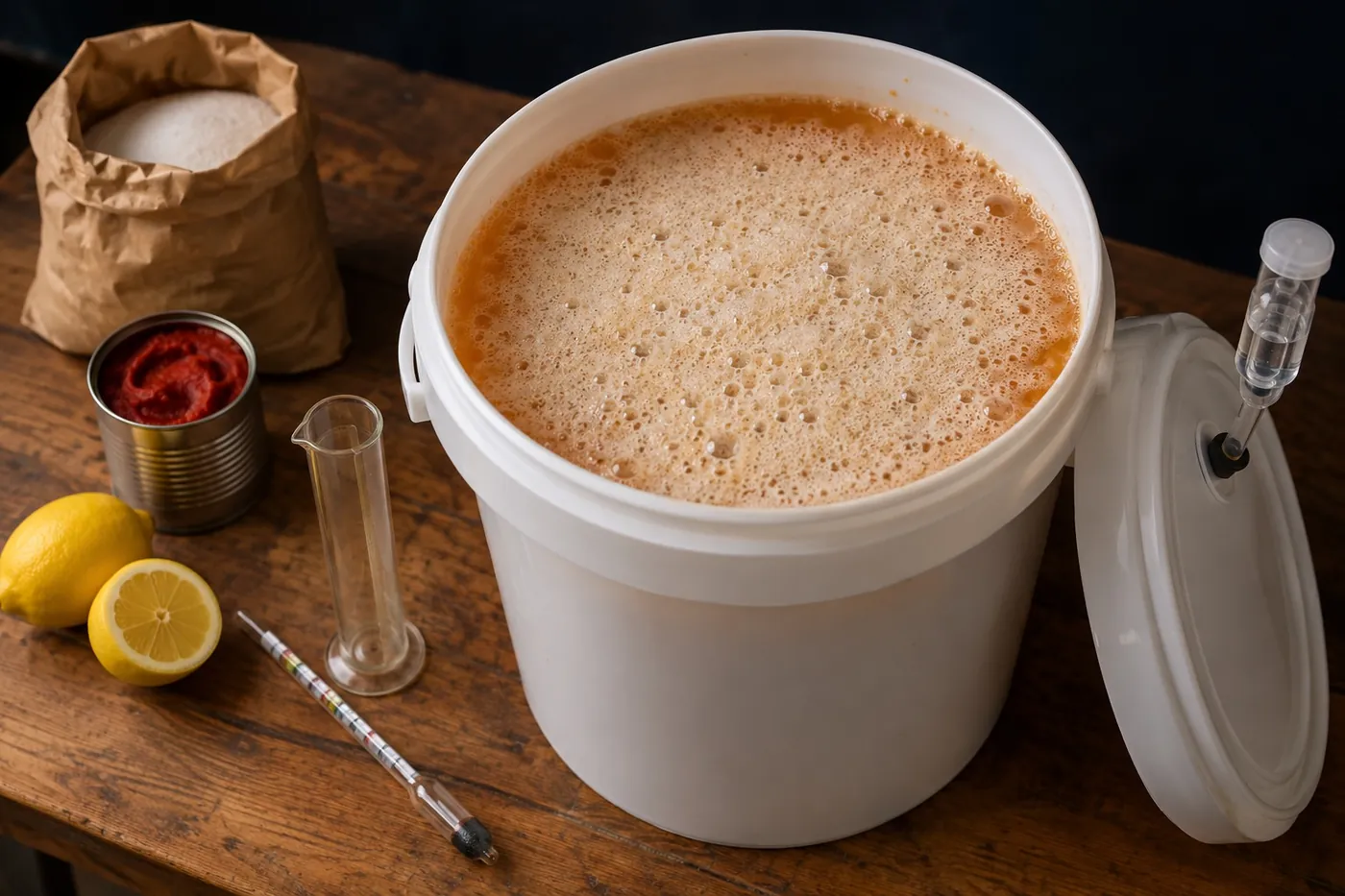
A healthy Birdwatchers wash starts within a day and ferments vigorously for the first few days. Temperature matters more than anything else: below about 24 °C it slows markedly, and above 32 °C bread yeast produces harsher by-products. A rotten-egg smell early on is common with bread yeast and usually fades; copper in the still removes what remains.
Distilling
For vodka or a gin base, a reflux still gives a clean, high-strength spirit in a single run. On a pot still, strip several washes, combine the low wines and run them again slowly. Either way, discard the foreshots and collect in jars - see making the cuts.
Fermenting a wash is legal in many places; distilling it often is not. Distil only where it is legal to do so, and check your local licensing first.
Troubleshooting
It hasn't started after 24 hours.
Check the temperature first, then the yeast's age. Bread yeast that has been opened for months may be weak.
It stopped early, well above 1.000.
Often a drop in pH, which sugar washes are prone to. Some distillers add a buffer such as crushed eggshells at the start. Check the temperature too.
It smells of rotten eggs.
Stressed yeast produces hydrogen sulphide. It usually clears by the end of fermentation; copper in the still deals with the rest.
Variations
- Inverted sugar. Simmer the sugar in part of the water with the recipe's lemon juice or citric acid for 30–45 minutes, and leave the acid out later - it stays in the wash. The yeast gets a quicker start, though no extra alcohol: see the guide to inverted sugar.
- Other yeasts. A distiller's or wine yeast tolerates more alcohol, but higher gravities bring more off-flavours. The recipe's strength is its simplicity.
Rate this recipe
Made it? Tell other distillers how it turned out.
Ratings are anonymous. You can change yours at any time.
From the forum
Made it, or have a question about it? Start the conversation in this recipe’s topic on the Stilligent forum.
More recipes
-
Neutral
All-Bran wash
Inverted sugar fed with All-Bran cereal: an almost foolproof wash that ferments dry in a week and clears on its own.
Pot or reflux -
Neutral
Wineo's plain ol' sugar wash
A plain sugar wash that relies on plenty of yeast rather than additives - very clean, and neutral even from a pot still.
Pot or reflux -
Neutral
Teddy's fast fermenting vodka (TFFV)
Wheat bran, sugar, DAP and baker's yeast, fermented dry in under four days for a clean vodka with a gentle wheat note.
Strip in a pot, spirit run in a reflux
Underlined terms are explained in the glossary - tap one for a quick definition.