
Captain Morgan–style Spiced Gold
A brown-sugar rum, a pinch of three spices, a teaspoon of molasses and a spoonful of toasted oak - shaken every day for a week, filtered twice and topped up with water. The result is a golden spiced rum that its creator prefers to the famous one it imitates.
- Makes
- Spiced gold rum
- Base
- Rum at 80%
- Steep
- 1–2 weeks
- Strength
- about 38% ABV
- Difficulty
- Easy
About this recipe
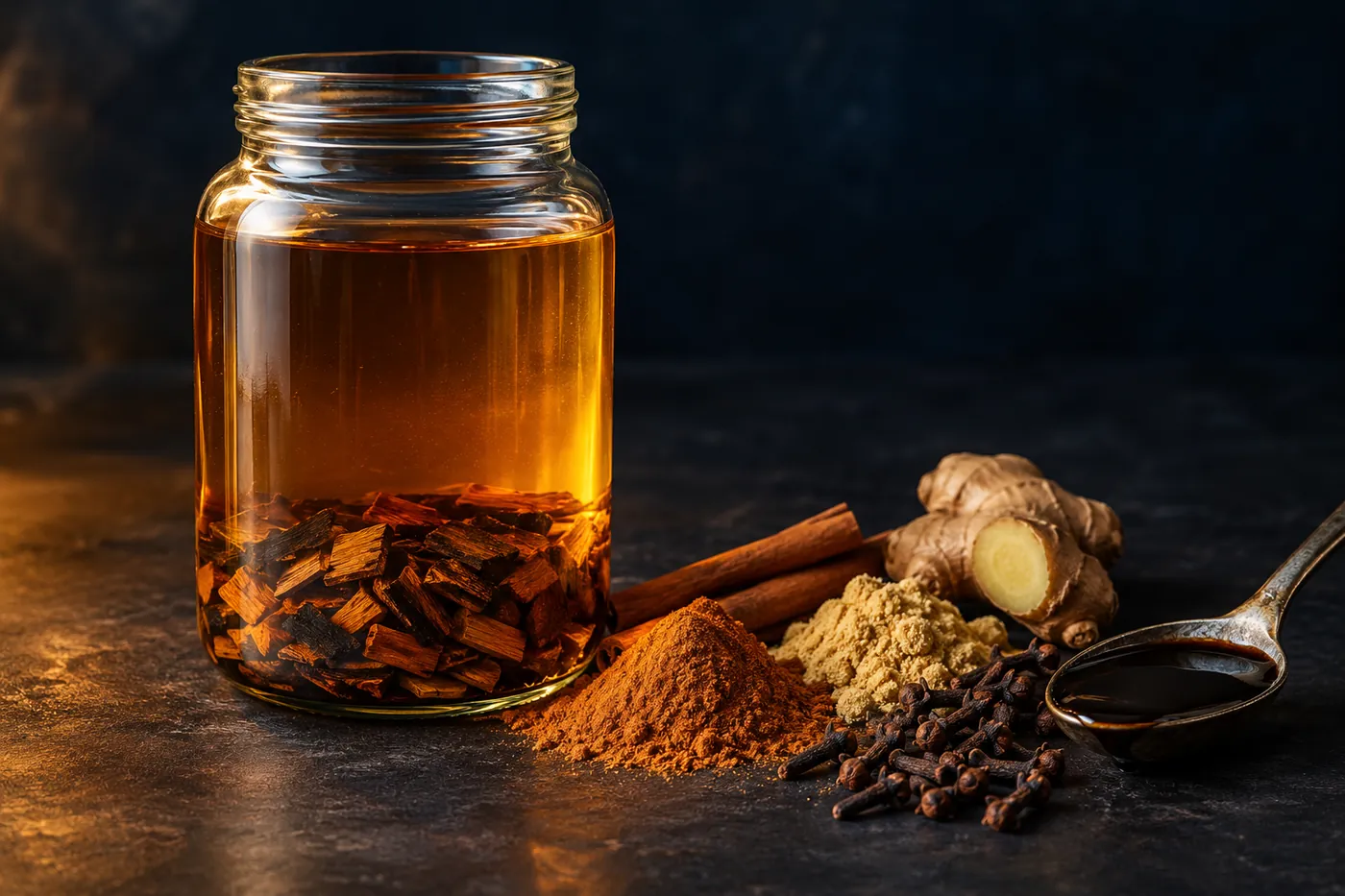
This recipe began as one home distiller's attempt to recreate Captain Morgan Spiced Rum, and became something he liked better. Mike worked on it over many batches, then shared an improved version that is simpler still: strong rum, three kitchen spices, a little molasses and toasted oak, left to steep and shaken hard every day.
The spices give the familiar warmth - clove first, then cinnamon and ginger - while the molasses deepens the colour and adds a dark-sugar note. The toasted oak supplies vanilla and a gentle woodiness, and turns the clear rum a warm gold within days. Topped up with water, it bottles at about 38%. The commercial spiced rums are a few per cent lower and noticeably sweeter; Mike prefers his drier, but it is easy to sweeten to taste.
Captain Morgan is a trademark of its owner. This is an independent home recipe in that style, with no connection to the brand.
Ingredients and calculator
Method
- Start with strong rum. Measure 800 mL of rum at 80% ABV into a bottle of about 1.7 L, glass or plastic.
- Add the flavourings. Add the cloves, cinnamon, ginger, molasses and toasted oak chips, close the bottle and shake well.
- Steep for a week. Leave it for at least seven days, shaking it hard every day: it blends the flavours remarkably well. For a fuller flavour, give it a second week.
- Filter twice. Run it through a coffee filter at least twice. The more you filter, the clearer it becomes.
- Top up. Top it up to 1.7 L in all with filtered or distilled water. That brings it to about 38% ABV.
- Bottle. Decant into clean bottles. It's ready to drink, and goes on improving for a few weeks.
Making the rum
Mike makes his base rum from a simple brown-sugar wash. Brown sugar is white sugar with some of its molasses left in, so it ferments completely while still carrying a little rum character.
- The wash: 6 kg of brown sugar, 25 g of citric acid to invert the sugar, 25 g of yeast nutrient and 10 g of Lalvin EC-1118, a strong wine yeast, in about 23 L - a starting gravity of around 1.100.
- Fermentation: kept at 24–26 °C, it ferments from about 1.100 down to 1.002 in roughly a week. Filter or settle it well before distilling, to keep yeast out of the boiler.
- Distilling: Mike runs it through a reflux column, which gives a clean, light rum at 85–90%. Discard the foreshots and make the cuts by smell and taste - see making the cuts. Dilute to 80% for this recipe.
For a heavier, more traditional rum to spice, use SBB's all-molasses rum or Pugi's rum.
Distilling is legal only where it is licensed: check your local rules before making your own spirit.
Serving
Pour it over ice with cola and a wedge of lime, with ginger beer for a spiced take on a Dark 'n' Stormy, or neat over a single large cube. Its dry finish makes it a fine base for hot buttered rum in winter.
Troubleshooting
It's cloudy after topping up.
Fine spice particles or oils coming out of solution. Let it stand for a few days and filter again.
Too much clove.
Clove dominates quickly. Use a level ⅛ tsp next time, or blend in some unspiced rum.
Not sweet enough.
Commercial spiced rums are sweeter. Stir in a little sugar syrup, a spoonful at a time, until it tastes right.
Variations
- The original version. Mike's first recipe steeps the rum at 53% - the strength, he found, that draws the most vanilla from oak - with 1 tbsp of toasted oak, 1 tsp each of cinnamon and ginger, and two cloves, for one to two weeks. It can be bottled at 53% or diluted to 40%.
- Colour. A little home-made caramel - sugar cooked to a deep amber, never burnt - deepens the gold.
Rate this recipe
Made it? Tell other distillers how it turned out.
Ratings are anonymous. You can change yours at any time.
From the forum
Made it, or have a question about it? Start the conversation in this recipe’s topic on the Stilligent forum.
More recipes
-
Rum
SBB's all-molasses rum
One hundred per cent molasses, hot dunder and fresh baker's yeast: a rum refined over more than fifty generations.
Pot or plated column -
Rum
Pugi's rum (Pugirum)
Molasses, brown sugar and a boiled “yeast bomb”, fermented in a day and a half - with saved rum oils for a full, heavy rum.
Pot still: fast strips, gentle spirit run -
Rum
Buccaneer Bob's silver, gold and black rum
Blackstrap molasses, live dunder and a sugar feed, double pot-distilled - then finished silver, gold or black from one batch.
Pot still, strip and spirit run
Underlined terms are explained in the glossary - tap one for a quick definition.